
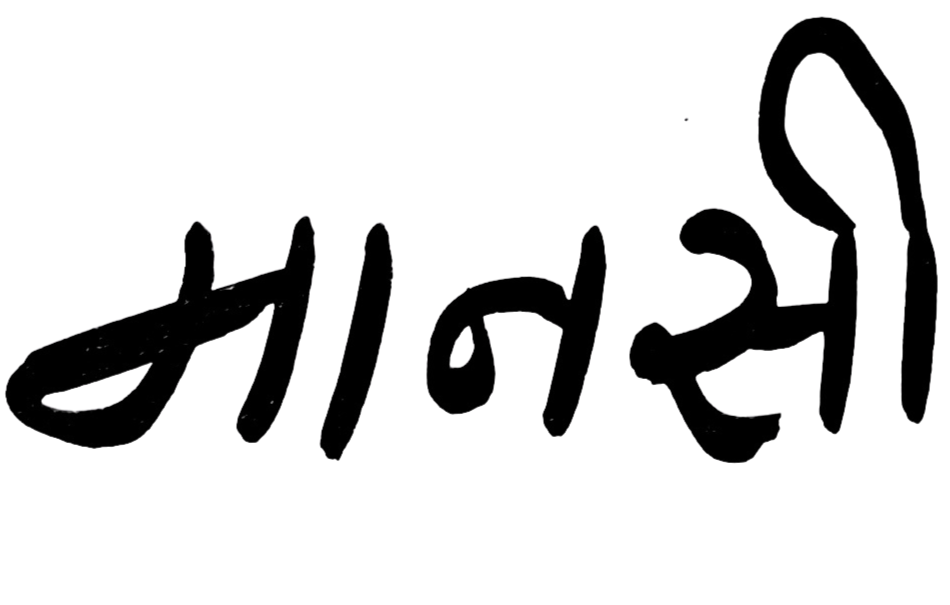

The script you see throughout this site — in the header, and pressed into the work I make — is my name, Mansi, written in Devanagari, the script of my mother tongue.
In Devanagari, a horizontal line called the shirorekha usually runs across the top of the letters, connecting them into a single bound form. It is how the script is traditionally written. It is how I learned to write it as a child in India.
When I adopted this as my artist’s mark, I left that line off. Not out of disrespect, but because I get to decide which traditions I carry forward and which I reshape.
Without the bar, my name still feels complete.
Unbound, it feels truer.
I spent the first twenty-one years of my life in India. I carry the lineage: childhood memories, the taste of certain foods, the reflexes of a culture that shaped me.
But I have also examined much of what I inherited: the expectations placed on women, the hierarchies, the silences, the unquestioned traditions. Some parts I have kept. Some I have set down.
Rooted and free.
That is what I am practicing.
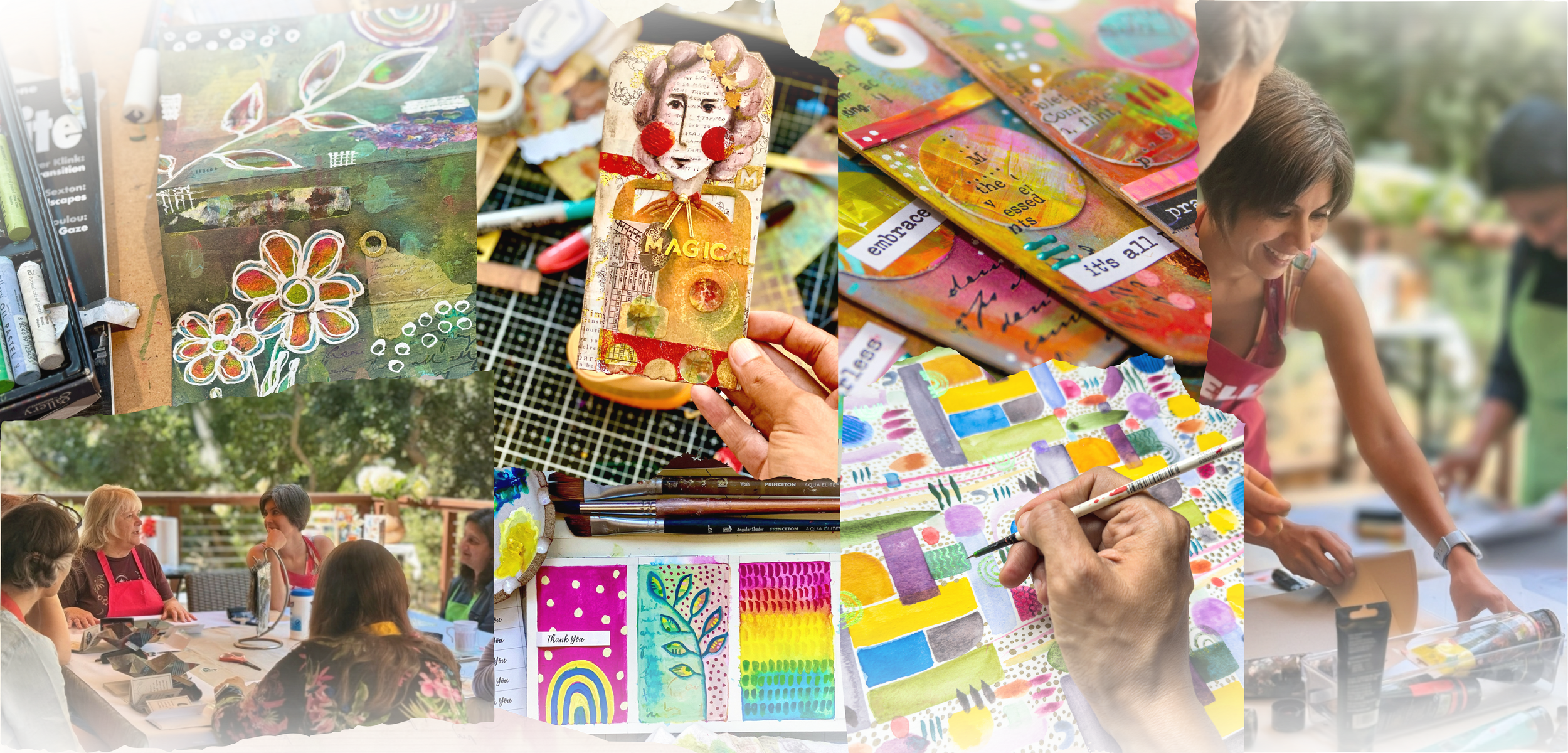
I am a self-taught artist, a professionally-trained writer, and an intuitive community facilitator.
For a long time, I thought these parts of me were separate.
Writing.
Making.
Gathering.
Noticing.
Over time, I realized they were different expressions of the same practice.
What I now call The RIPPLE Practice™ didn’t begin as a framework. It began as paying attention to what happens when people feel seen, when hands are busy, when conversation deepens, when we remember we are more than our roles.
If you’re curious how that practice shows up in my life and work, start here.